Wildflowers are wonderful, but this spring, I want to propose a toast to trees. Unlike ephemeral, unpredictable-if-beautiful spring blooms, trees are reliable marvels of nature. They spread shade in summer, offer sanctuaries to birds and critters of all kinds and anchor our sandy soil. Yet we tend to take them for granted, piling praise on the sensational rather than the substantive – a common human tendency.
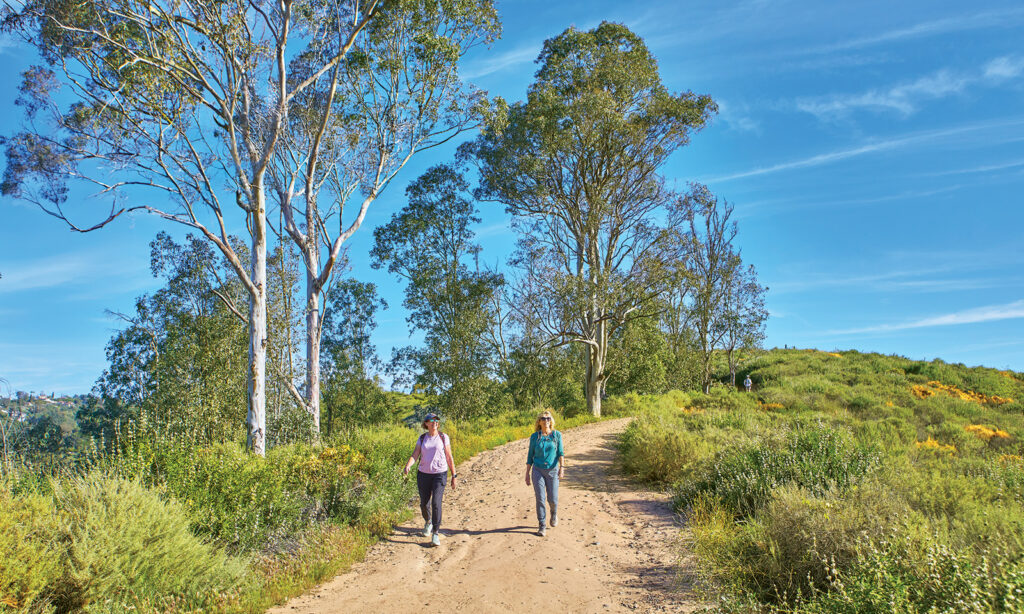
Recently, hiking in Peters Canyon, I took note of its arboreal richness. In March 1992, Irvine Company dedicated 340 acres to the county to establish the regional park, helping to preserve rare riparian habitat in our part of the world. Consequently, this wonderful wilderness provides an ideal home for black willows and cottonwoods, among the thirstiest and least common of native trees in semi-desert Southern California.
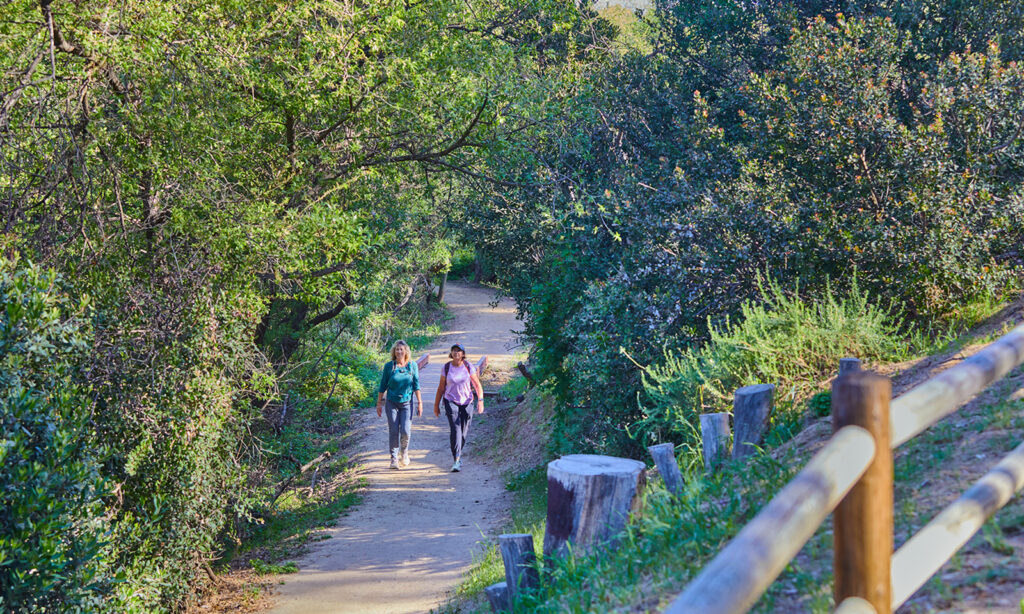
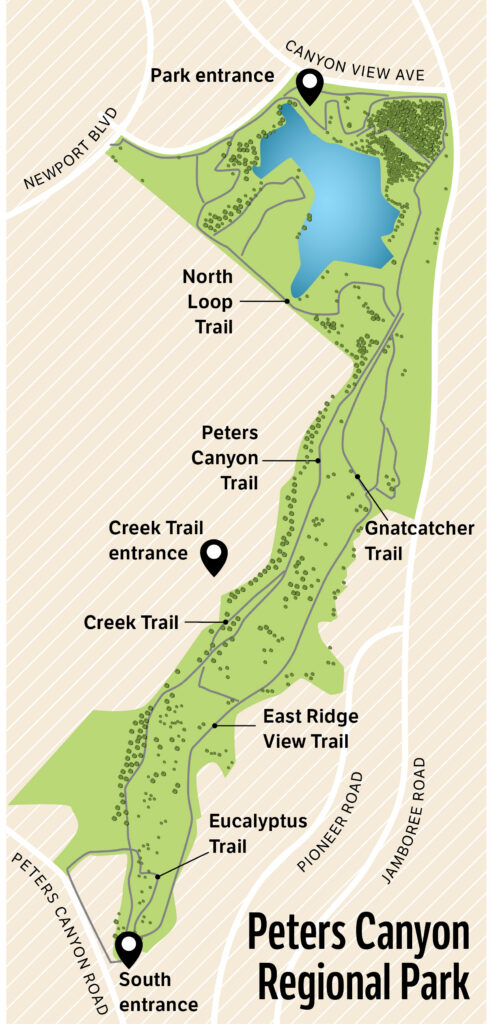
One of my favorite trails, Creek Trail, is easily accessible from the parking area by way of the North Loop trail, which hugs the 55-acre reservoir. It’s along these two trails that you’ll find most of the willows and cottonwoods.
Spring scenes
In spring, female black cottonwood trees fling out fluffy swirls of tiny seeds that are covered in white, cottony hairs. Gathering in piles on the ground, they look like miniature snowdrifts on the banks of the creek. The gray bark of older trees is deeply furrowed, providing a contrast to neighboring willows, their slender leaves fluttering in the breeze.
Less rare doesn’t mean less lovely. You’ll find a great variety of tree and shrub species along the short, sweet Creek Trail: blue elderberry, lemonade berry, laurel sumac, wild grape and a small coastal live oak. In early spring, watch for wild cucumber’s curlicued stems, delicate white flowers and spiky green fruit.
It’s a treat to sit on a bench in the dappled shade, listening for flycatchers, warblers and other songbirds that enjoy this lush habitat as much as we do. Several bridges crisscross the creek, just one reason kids find this secluded trail quite magical.
Mighty sycamores
Sturdy sycamores line Peters Canyon Trail. They can grow up to 130 feet tall and live an astounding 500 years. The Chumash made wood bowls from the round, burl-like growths found on the trunks.
You’ll often see clumps of mistletoe on the branches – they look like large, green pompoms. Mistletoe is a partial parasite, which attaches to a tree via sucker roots and absorbs some water and nutrients from its host plant. It also produces some of its own energy via photosynthesis in its green leaves and provides food and shelter for birds and butterflies, including the great purple hairstreak. Most trees are not harmed by mistletoe in small quantities.
Sycamore trunks serve as granaries where woodpeckers store their acorns, as well as provide a home for cavity-nesting birds, including bluebirds, house wrens and screech owls. One of my favorite birds is the red-headed acorn woodpecker. They rear their young in communal family groups of a dozen or more birds.
Take a last look at willows as you near the parking lot. In the fall, these trees put on a spectacular show, their leaves turning bright yellow. Native Americans carved their branches into arrow shafts and used the bark as a medicine to relieve aches and pains.
So here’s to trees, our wind-whispery friends, standing tall and proud, providing us with food, medicine, art and the succor of shade on summer days – and hospitable habitats for creatures large and small.
This spring, visit Peters Canyon Regional Park and celebrate the splendor of this arboreal Eden.