As we approach the end of the year and the holidays, I often find myself reflecting on how quickly the world seems to be changing. In 2027, I want to remind myself how the Earth has evolved and changed over millions of years, and how it continues to thrive.
Thankfully, here in Orange County, visionary, caring people have preserved a great deal of our wild heritage in perpetuity.
So how has the landscape changed over time, and why?
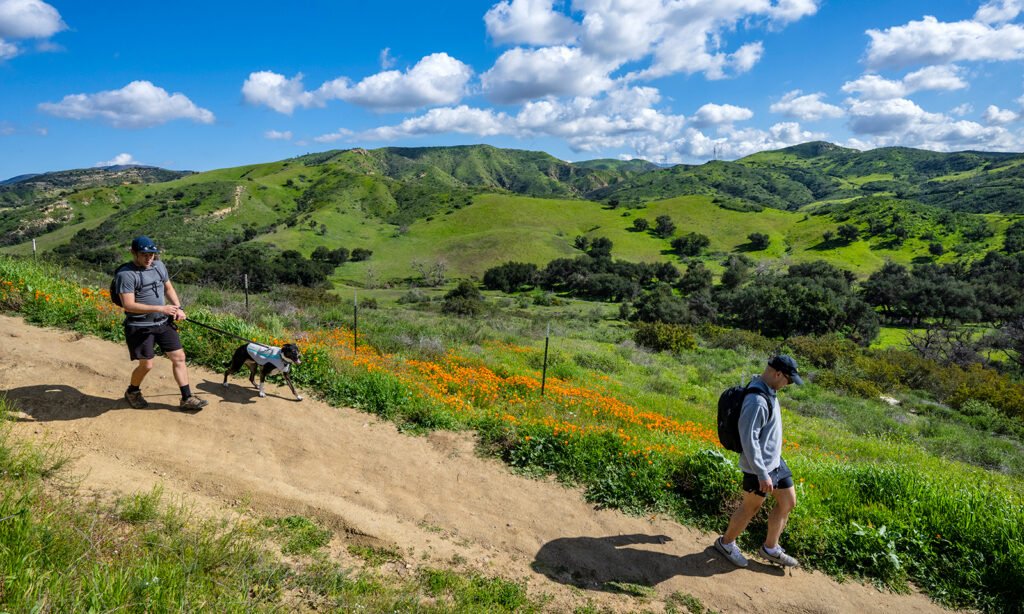
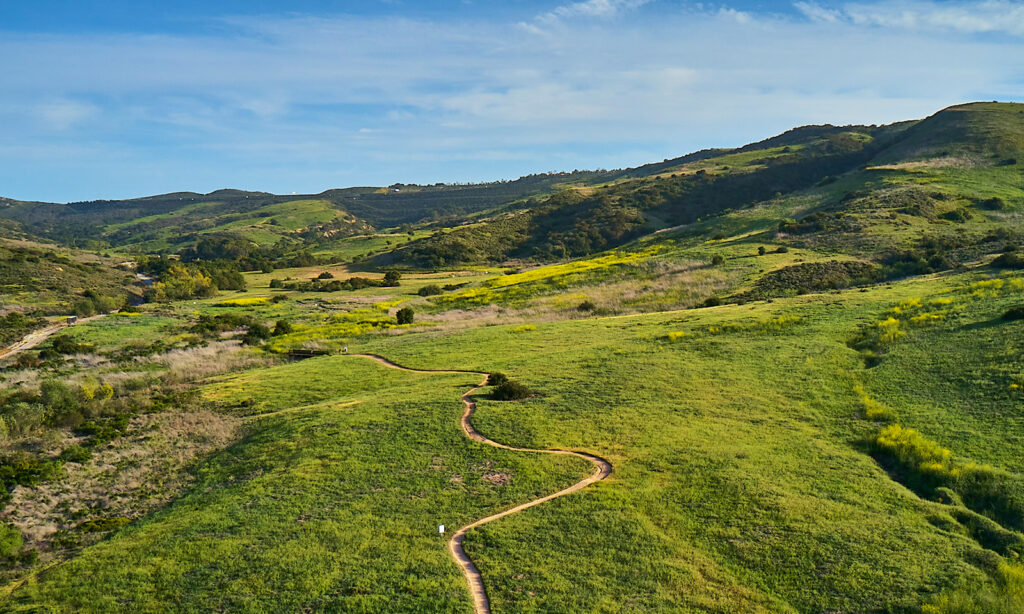
No better way to find out than to explore the vast wilderness areas and neighborhood parks preserved by Irvine Company. Here you will find natural markers of the past, visible in plain sight, and man-made reminders of the events that shaped our environment.
WALK THROUGH HISTORY
I’ll begin by hiking Stagecoach North to Laurel Canyon in the Laguna Coast Wilderness. Here you’ll see sandstone formations from millions of years ago when this land sat beneath a shallow sea. Note rocks white with calcium carbonate, the compressed shells of ancient shellfish. Be careful not to trip over an 8-inch ridge, evidence of an ancient earthquake fault.
Leap through centuries to ponder the lives of early Native Americans. Visit Weir Canyon and Limestone Canyon, where you’ll find some of the loveliest groves of oak trees in Orange County, fruiting with acorns that fed these long-ago inhabitants.
Throughout Irvine’s wilderness areas, in spring, see the spiky wild cucumber seedpods that the Acjachemen turned into loofahs; smell the white sage used for rituals; wonder at the gray-green bunches of doveweed thrown into creeks and ponds to stun fish, making them easy to catch.
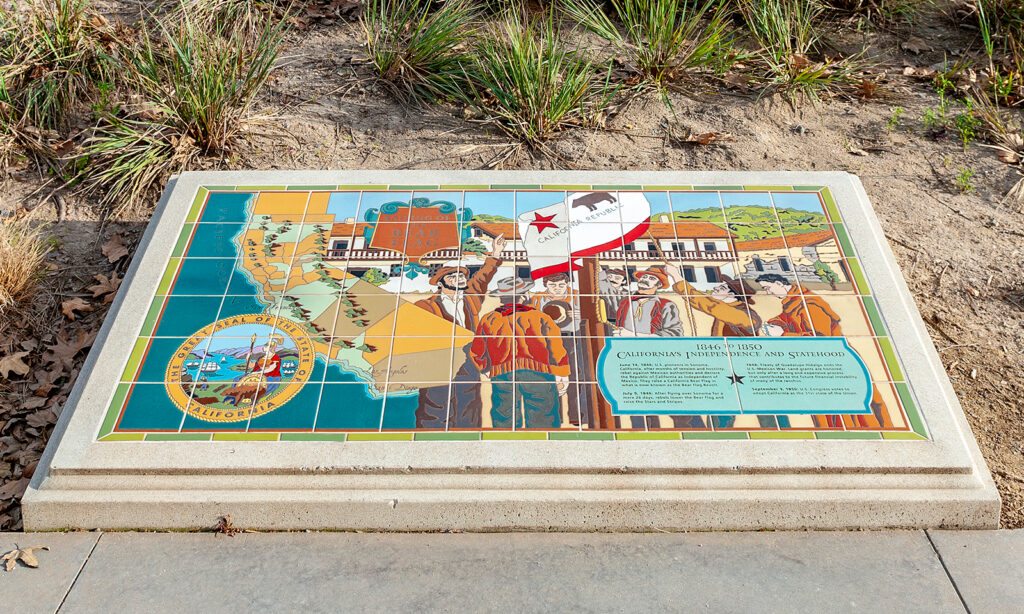
Then move on to the early colonial settlers. At Jeffrey Open Space Trail, placards trace California’s history from 1562, when it first appeared on a map, leading up to statehood in 1850. Artistic displays zero in on Irvine’s evolution from its farming era to a mix of neighborhoods and plentiful open space.
RANCHING AND PRESERVATION
At Portola Springs Community Park, you can see where Gaspar de Portolà’s expedition camped in 1769 during the first European exploration of this area. Take a docent-led hike up Fremont Canyon to view the coal mine that existed from 1864 to 1912.
Visit Bommer Canyon, now rich with wildflowers and wildlife, with its many reminders of cattle-ranching days, including an old water tower.
Fast-forward to March 1992, when Irvine Company dedicated Peters Canyon’s 354 acres to the county to establish the regional park, helping to preserve and restore rare riparian habitat.
Formed in 2005, the Irvine Ranch Conservancy now oversees approximately 40,000 acres of native habitat, which is constantly monitored and revitalized. Planning continues, with a vision for Irvine’s largest nature park slated to include wildlife observation points, meadows and waterways.
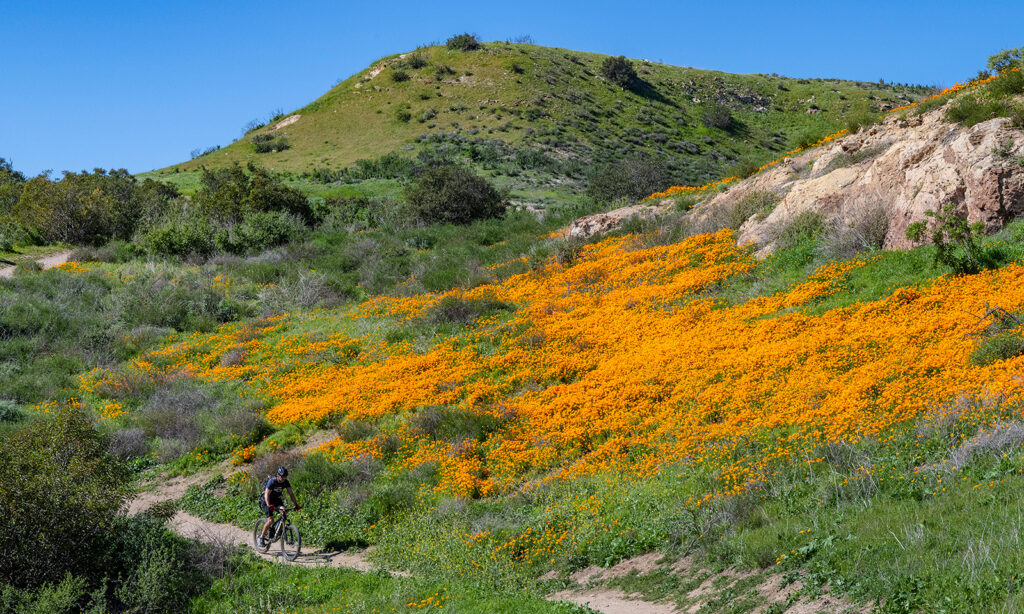
If El Niño delivers the rain that’s predicted, I’m hoping for a superbloom of wildflowers springing in part from seeds dormant for more than 100 years, an example of “time future contained in time past,” to quote T.S. Eliot’s “Four Quartets.”
I’ll end my trek through time hiking to watch the sun set in Orchard Hills and the full moon rise in Bommer Canyon, thankful that some things never change and that I’m lucky enough to live in a place where nature, and the past, are treasured and conserved for all time.